

Sinusitis
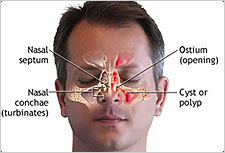
The sinuses are small empty caverns in the bony skull. They are lined by mucus membranes and connect with the nasal passages. Some sinuses are present at birth; others continue to grow and develop for the first 20 years of life.
Sinusitis is the name given when the lining of one or more of these sinuses is red, swollen, and tender, the opening is blocked, and the sinus is at least partially filled with fluid (mucus and/or pus).
Technically, every cold is also a case of viral sinusitis. However, when doctors use the term sinusitis they are usually referring to a bacterial infection in the sinuses.
Acute bacterial sinusitis has been present for less than three or four weeks; subacute bacterial sinusitis has been present for up to about ten weeks; and chronic bacterial sinusitis has been present for about ten weeks or more. The three may have different causes and treatments.Have you ever had cold symptoms that lasted more than several days? If so, chances are you may have had acute sinusitis, an inflammation of the nasal sinuses. Experts estimate that 31 million people develop sinusitis each year, making it one of the most common health conditions in America. That is one reason why it is extremely important to learn about the signs and symptoms of sinusitis.
Symptoms of sinusitis
Symptoms of sinusitis may include:

• profuse, thick, colored nasal drainage
• bad tasting post-nasal drip
• cough
• head congestion / headache
• a plugged up nose
• a feeling of facial swelling
• toothache
• constant tiredness
• occasionally a fever
You have sinusitis when:
• Cough - Sometimes
• Extreme exhaustion - Never
• Facial Pressure - Yes
• Feweer - Sometimes
• Nasal congestion - Yes
• Nasal discharge Thick, Yellow-Green
• Runny nose - Often
• Sneeying - No
• Sore throath - No
• Tiredness and Weakness - Mild
Who gets it?
Anyone can get a sinus infection. Colds or nasal allergies are usually present first. Sinus infections are also more common when there is exposure to cigaterre smoke.
Is it contagious?
In general, sinus infections are not contagious (although there have been rare outbreaks associated with swimming together). The colds that can lead to sinus infections are quite contagious.

Sinusitis Treatment
Acute and subacute bacterial sinusitis is usually best treated with appropriate antibiotics (such as Azithromycin or Ciprofloxacin) at an appropriate dose for the appropriate amount of time (usually 14-21 days). The antibiotics are usually continued for at least 7 days after symptoms disappear. If symptoms worsen or do not improve, the antibiotic is usually changed early in the course.
Saline nose drops may thin the mucus and speed healing. Decongestants may help symptoms, but usually do not speed healing. Antihistamines may thicken the mucus and slow healing.

Allergists also recommend several non-drug treatments such as breathing in hot, moist air, applying hot packs to the face and washing the nasal cavities with buffered salt water. In certain cases, Endoscopic surgery to correct structural problems of the nose may be needed in more serious cases of chronic sinusitis. If there is the possibility of surgery to correct the sinusitis, your allergist will be able to make the proper referral to a surgeon.
Favorite Marketplace



Submenu
-

Allergy All about Allergies
-

Pet Allergies Allergy Prevention
-

Sinusitis Learn about sinusitis
-

Eye Drops How to use eye drops
-

Nose Drops How to use nose drops
-

Allergy Medications The most prescribed drugs
-
Allergy Medications The most prescribed drugs
-

Advair inhaler Fluticasone Propionate...
-

Allegra Fexofenadine HCl
-

Clarinex Desloratadine
-

Claritin Loratadine
-

Flonase Fluticasone
-

Flovent Fluticasone Propionate
-

Zyrtec Cetrizine HCl
-

Quercetin Best Quercetin for allergies
Freebies & Discount Codes
Find out freebies and coupons for savings on health products available on the Web