

Flovent® Inhaler 
(generic name: Fluticasone Propionate)
Flovent is the brand name of a drugs Fluticasone Propionate.
It prevents the release of substances in the body that cause inflammation.
Flovent inhalers are used to prevent asthma attacks.
How to Use Your Flovent Inhalation Aerosol?
Before starting to use your Flovent inhaler, remove it from the overwrap and safely discard the overwrap and drying packet, which is also inside the overwrap. The inhaler should be at room temperature before use.
Follow the instructions below. If you have any questions, ask your doctor or pharmacist.
The dark orange actuator supplied with Flovent should not be used with any other product canisters, and actuators from other products should not be used with a Flovent canister.
SHAKE THE INHALER WELL for 5 seconds immediately before each use.
PRIME THE INHALER BEFORE USING IT FOR THE FIRST TIME by releasing 4 test sprays into the air away from your face, shaking well for 5 seconds before each spray. In cases where the inhaler has not been used for more than 7 days or when it has been dropped, prime the inhaler again by shaking well for 5 seconds and releasing 1 test spray into the air away from your face.
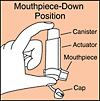
1. REMOVE THE CAP FROM THE MOUTHPIECE (see image); the strap on the cap will stay attached to the actuator. Inspect the inhaler mouthpiece for the presence of foreign objects before each use, especially if the strap is no longer attached to the actuator or if the cap is not being used to cover the mouthpiece. Make sure the canister is fully and firmly inserted into the actuator. SHAKE THE INHALER WELL for 5 seconds immediately before each use.
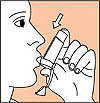
2. BREATHE OUT FULLY THROUGH YOUR MOUTH, expelling as much air from your lungs as possible. Place the mouthpiece fully into your mouth, holding the inhaler with the mouthpiece down (see image) and closing your lips around it.
3. WHILE BREATHING IN DEEPLY AND SLOWLY THROUGH YOUR MOUTH, FULLY DEPRESS THE TOP OF THE METAL CANISTER with your index finger (see Figure 2). Immediately after the spray is delivered, release your finger from the canister. When you have breathed in fully, remove the inhaler from your mouth, and close your mouth.
4. HOLD YOUR BREATH AS LONG AS POSSIBLE, or up to 10 seconds, then breathe normally.
5. WAIT ABOUT 30 SECONDS AND SHAKE the inhaler again. Repeat steps 2 through 4.
6. REPLACE THE MOUTHPIECE CAP AFTER EACH USE.
7. After you finish taking your dose, rinse your mouth with water and spit it out. Do not swallow.
8. Because of the difference in propellants, you may notice a slightly different taste or feel of the spray in your mouth with FLOVENT HFA than you are used to with FLOVENT® (fluticasone propionate) Inhalation Aerosol.
9. Never immerse the canister in water to determine the amount remaining in the canister ("float test").
10. DISCARD THE INHALER AFTER YOU HAVE USED THE LABELED NUMBER OF INHALATIONS. The correct amount of medicine in each inhalation cannot be assured after 120 inhalations from Flovent 44 mcg, Flovent 110 mcg, and Flovent 220 mcg 120-actuation inhalers, even though the canister is not completely empty and will continue to operate. The inhaler should be discarded when the labeled number of inhalations have been used; therefore, it is recommended to keep track of the number of actuations used from your inhaler. Before you reach the labeled number of inhalations, however, you should consult your doctor to see if you need to refill your prescription.
What happens if I miss a dose?
Use the missed dose as soon as you remember. However, if it is almost time for the next regularly scheduled dose, skip the missed dose and use the next one as directed. Do not use a double dose of this medication.
What happens if I overdose?
An overdose of this medication is not likely to occur. If you do think an overdose has occurred, call an emergency room or poison control center.
What are the possible side effects?
Serious side effects from fluticasone inhalation are not likely to occur. If you experience any of the following serious side effects, stop using fluticasone inhalation and seek emergency medical attention or contact your doctor immediately:

• an allergic reaction (difficulty breathing; closing of the throat; swelling of the lips, tongue, or face; or hives);
• numbness, tingling, or pain;
• a rash or unexplained open sores or bruising;
• worsening respiratory symptoms.
Other, less serious side effects may be more likely to occur. Continue to take fluticasone inhalation and talk to your doctor if you experience:
• dryness of the mouth, nose, or throat after use;
• yeast (or another) infection in the mouth or throat (white patches);
• hoarseness or deepening of the voice, cough, or sore throat;
• wheezing;
• increased pressure in the eyes, glaucoma, or tearing of the eyes;
• headache or lightheadedness;
• unpleasant (or loss of) taste or smell;
• decreased growth in children taking large doses;
• cataracts, which may develop after long-term use.
Side effects other than those listed here may also occur. Talk to your doctor about any side effect that seems unusual or that is especially bothersome.

Where to buy Flovent (Fluticasone Propionate)?
Flovent is a prescription drug, and as such it can't be bought on the free market. There are also some other brand names for the same drug. In Europe, the most prescribed one is Flixotide. However, there are other generic medications that contain the same ingredients (Fluticasone Propionate) available over-the-counter. One of them is Flonase nasal spray, which is available through Amazon.
Favorite Marketplace


Submenu
-

Allergy All about Allergies
-

Pet Allergies Allergy Prevention
-

Sinusitis Learn about sinusitis
-

Eye Drops How to use eye drops
-

Nose Drops How to use nose drops
-

Allergy Medications The most prescribed drugs
-
Allergy Medications The most prescribed drugs
-

Advair inhaler Fluticasone Propionate...
-

Allegra Fexofenadine HCl
-

Clarinex Desloratadine
-

Claritin Loratadine
-

Flonase Fluticasone
-

Flovent Fluticasone Propionate
-

Zyrtec Cetrizine HCl
-

Quercetin Best Quercetin for allergies
Freebies & Discount Codes
Find out freebies and coupons for savings on health products available on the Web